Uganda’s Queen Elizabeth National Park
Uganda’s Queen Elizabeth National Park is a popular destination in western Uganda, surrounded by lakes and mountains. Established in 1952, it is one of Uganda’s oldest and largest protected areas, covering 1978 square kilometers. The park, originally named Kazinga National Park, was renamed in 1954 to honor Queen Elizabeth II. It features a variety of habitats, including savannah vegetation, and is home to over 95 mammals, 600 bird species, and 9 primate species, including chimpanzees and various monkeys.
The Kazinga Channel, a waterway that runs through the park between Lake George and Lake Edward, is home to the largest population of crocodiles in the world. The unusual tree-climbing lions that are only found in Queen Elizabeth National Park and two other locations, Kruger National Park in South Africa and Lake Manyara National Park in Tanzania, are the reason for the park’s fame.
Top Attractions in Queen Elizabeth National Park
Mammals
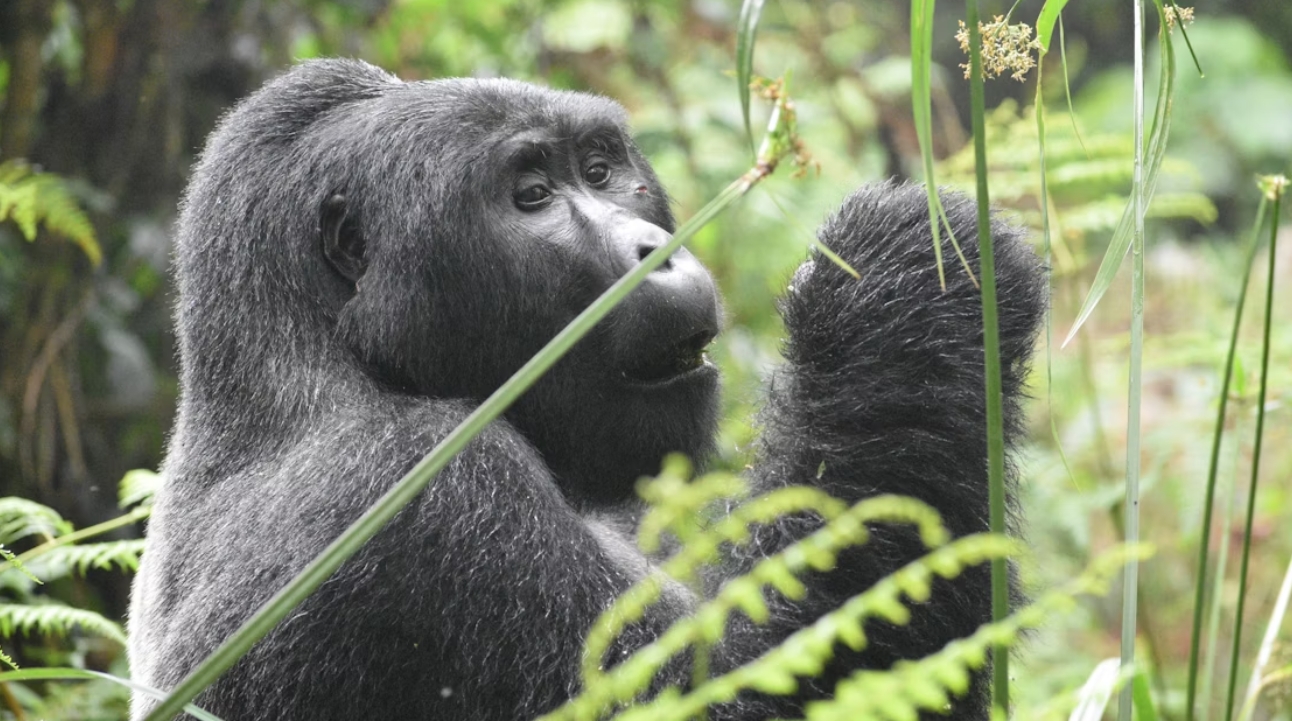
Several wildlife species find a home in Uganda’s Queen Elizabeth National Park, which is mostly covered in savannah vegetation. While engaging in various park activities, visitors have a chance to witness over 95 mammals, primates, and bird species in the park. One can see the primates up close by traveling to the Kyambura Gorge in the Valley of Apes. Chimpanzees, elephants, lions, leopards, Uganda kobs, duikers, olive baboons, spotted hyenas, buffaloes, bushbucks, giant forest hogs, topis, hippos, crocodiles, Jackson hartebeests, waterbucks, sitatungas, side-striped jackals, black and white colobus, vervet monkeys, l’hoest’s monkeys, blue monkeys, among others.
The Rare tree-climbing lions
These alone are unique attractions, and many visitors visit the park to witness this rare activity. Only a small number of tree-climbing lions can be found in South Africa’s Kruger National Park and Tanzania’s Lake Manyara National Park, with the majority occurring in Queen Elizabeth National Park. The fact that these lions spend most of their time in trees sets them apart from other lions.
They sleep most of the day and climb big fig trees for a variety of reasons. Avoiding the Earth’s heat and locating the best spot to catch their prey are two of the reasons. Visitors can observe them in the Ishasha area of Queen Elizabeth National Park, which is situated in the park’s southern sector.
Kazinga channel
Between Lake George and Lake Edward is the Kazinga Channel, the largest channel in the world. The breathtaking Kazinga Channel, which connects these two lakes in Queen Elizabeth National Park, is home to a variety of wildlife, including frogs, crocodiles, monitor lizards, and animals like hippos, buffalo, and waterbucks. The greatest number of crocodiles can be seen on a boat trip or a nature walking tour near the Kazinga Channel. Many of the park’s animals rely on the Kazinga Channel for water, and the woodland that surrounds the channel is home to a variety of bird species.
Birds in Uganda’s Queen Elizabeth National Park
With its rich ecosystem, Queen Elizabeth National Park is home to about 600 different species of birds. The park’s many flora types provide these bird species with food and a comfortable place for birdlife. These bird species can be seen on nature walks, boat safaris, and game drives. Bird species to see include the Red-knobbed Coot, Senegal Coucal, African Crake, Black-billed Turaco, African Finfoot, African Rail, Blue-headed Coucal, Klaas’s Cuckoo, White Brown Coucal, Common Waxbill, Lesser Moorhen, Yellow-billed Stork, Black Crake, Jacobin Cuckoo, Curlew Greenshank, Great-spotted Cuckoo, and others.
Equator
In the world, the equator divides the northern and southern hemispheres. Queen Elizabeth National Park, where the equator happens to pass, is a destination in and of itself. The equator at Kikorongo, near the park’s Kasenyi sector, is always open to visitors who want to capture unique photos of themselves standing simultaneously on both sides of the globe.
Crater lakes
Over ten crater lakes can be found in Queen Elizabeth National Park. The three main crater lakes that are accessible to tourists are Lake Katwe, Bunyaruguru Crater Fields, and Ndali-Kasenda Crater Lakes, which are near Kibale Forest Park. Tourists who are on nature excursions can always stop by and observe the stunning beauty of these crater lakes as they take photos to capture these geographical formations and learn more about them, including their formation.
The best way to access the park
Visitors can reach Murchison Falls National Park in one day by either road or air transport. The drive from Kampala to the park is about 398 kilometers and takes 5 to 6 hours, with two main routes. The first route goes through Masaka, Mbarara, Bushenyi, and Kasese, while the second follows the Mubende-Fort Portal to Kasese. Both routes offer great views of the surroundings with dotted vegetation cover and tea plantations.
Additionally, the park is accessible by air using regular and chartered flights. Visitors can fly into the national park and land at Mweya Airstrip. To provide visitors with the quickest possible access to the park, airline firms like Kampala Executive Aviation, Aerolink Uganda, and Bar Aviation Uganda arrange these flights daily. These flights always operate from Entebbe International Airport or Kajjansi Airfield to Mweya Airstrip within the park.
Accommodation options in Uganda’s Queen Elizabeth National Park
Visitors who want to remain overnight or stay longer at the park should be provided with lodging alternatives, just like other national parks. Accommodations vary from low-cost to mid-range to high-end, depending on the traveller’s budget. These include Elephant Hub Cottages, Volcanoes Kyambura Gorge Lodge, Topi Lodge, Ishasha Wilderness Camp, Hippos Safari Lodge, Marafiki Safari Lodge, Elephant Plains, Kazinga Channel View Resort, Enshama Safari Lodge, Mweya Safari Lodge, Jacana Safari Lodge, Enganzi Game Lodge, Mweya Safari Lodge, and Simba Safari Camp, among others. These are just a few of the places to stay in Queen Elizabeth National Park.
What is the best time to visit Queen Elizabeth Park?
Following Uganda’s Queen Elizabeth National Park, the park is open year-round, but certain months are better than others. During the dry months of June through September and December through February, this lovely park is most accessible. The park’s usable roads, short, sparse foliage, and little to no rainfall, which keeps game routes dry, are what set them apart. In the rainy months of March through May and October through November, Queen Elizabeth National Park remains open to visitors. Because housing facilities are on sale, this time of year is perfect for tourists on a tight budget. However, during the wet season, game tracks become muddy and unsuitable due to significant rains. The park can only be reached by impassable roads and tall vegetation.