Mgahinga Nature Walk Exploration
Mgahinga Nature Walk Exploration in southwestern Uganda is known for its rich biodiversity, including forests, marshes, lakes, and rivers, creating ideal spots for nature walks. The park spans 33.9 square kilometres and borders Rwanda and the Democratic Republic of Congo. While gorilla trekking is the main attraction due to its endangered mountain gorillas, visitors can also enjoy activities like nature walks, birdwatching, hiking, and golden monkey trekking. There are beautiful walking trails that lead to local villages, offering a chance to connect with tribes like the Batwa people, who were affected by their eviction in 1991.
Mgahinga Nature Walk Exploration
Visitors can hike the border trail up the slopes of Mount Sabyinyo to the intersection of the borders of the Democratic Republic of the Congo, Rwanda, and Uganda. It takes roughly 5 to 6 hours to complete the walk, which passes through various amazing ecological zones, including bamboo, heath, moorland, woodlands, shrubs, and grasslands. It offers exceptional chances to see primates, especially gorillas and the stunning golden monkeys, as well as the picturesque caldera on Gisozi Hill.
The summit of Gisozi Hill also provides a breathtaking view of the park, encompassing the larger Virunga Massif and the enchanted Bwindi Impenetrable Forest. The 5-hour Sabyinyo Gorge Trek is one of the most challenging yet worthwhile trekking trails. This track requires a high level of physical and mental fitness to finish because it leads to steep parts of the park. To be in awe of the many flora zones, breathtaking volcanoes, and unusual bird species, visitors must also finish a winding nature trek on the slopes of Mount Sabyinyo.
Always be on your guard when stretching for nature walks or exploring any of the paths, and pay attention to the sharp, loud calls of the monkey species as they leap from tree to tree and the sweet, melodic calls of the local birds. One of the elusive large mammals, like the forest hog, the forest elephant, or a variety of antelope species, may even appear on a fortunate day.
Following the Mgahinga Nature Walk Exploration, numerous rare species of the Albertine Rift, including the stunning Rwenzori Turaco, Regal Sunbird, Red-headed Sunbird, and many more, can be seen on a nature walk tour through the lush forest down the deep Sabinyo Gorge. A birdwatcher’s paradise, Rugezi Swamp, is traversed by this nature trail. There are multiple vegetation zones along the breathtaking nature walks to the Congo border. A panoramic view of Lake Mutanda, Kisoro, and Bunagana villages, as well as the calderas atop the hill, is among the picturesque and remarkable vistas it provides.
Activities to do in Mgahinga Gorilla National Park
Gorilla Trekking
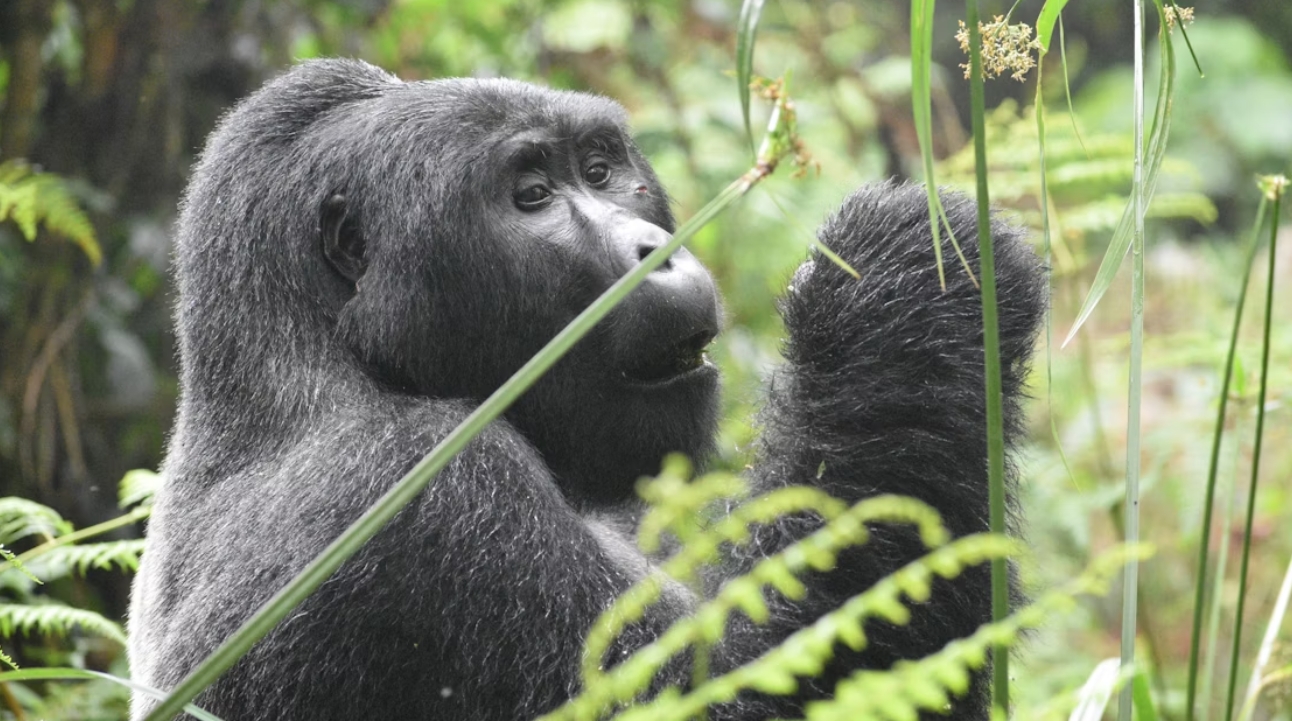
Following the Mgahinga Nature Walk Exploration, the two Ugandan parks that are fortunate enough to have endangered mountain gorillas and special gorilla tracking locations are Mgahinga Gorilla National Park. Compared to their counterparts in the Bwindi Impenetrable Forest, mountain gorillas in Mgahinga maintain a higher altitude, which causes their coats to become fuzzier. There is only one habituated gorilla family in the park, known as Nyakagezi, with a team of silverbacks. Originally highly migratory, the Nyakagezi Gorilla family has now settled in Uganda after crossing to Rwanda and Congo. When it comes to gorilla families, the Nyakagezi group is the only family that can easily be accessed compared to those in Bwindi Impenetrable National Park.
A briefing regarding the rules governing the trekking exercise is given at 8:00 am before the gorilla trekking adventure in Mgahinga National Park begins. After that, park rangers lead guests on a quest for the Nyakagezi family. A variety of wildlife species, including primates like blue, red-tailed, and black-and-white colobus monkeys, as well as several bird species, are likely to be encountered in the jungle. Depending on the gorilla family’s location and the trekkers’ pace, trekking these mountain gorillas can take about 30 minutes to 2 hours.
Golden Monkey Trekking
Following the Mgahinga Nature Walk Exploration, the only two national parks where golden monkey trekking is now practised are Mgahinga Gorilla National Park (Uganda) and Volcanoes National Park (Rwanda). These unusual golden monkeys are endemic to the Virunga Conservation Area in the Virunga volcanoes in Uganda, Rwanda, and the Democratic Republic of the Congo, as well as the Albertine Rift. They are subspecies of blue monkeys where the alpha male, who serves as the troop leader, guardian, and decision-maker, particularly when it comes to guiding the troop to food sources and other locations, leads the massive troop of 15 to 30 individuals. Golden monkeys are lively primates that enjoy playing a lot, especially in bamboo forests, where they spend most of their time on tree branches, jumping from one tree to another.
Beginning at 8:00 am with a briefing at the park information offices, the golden monkey trekking activity lasts anything from 30 minutes to three hours. Educating guests on the proper conduct during golden monkey trekking is the goal of this briefing. These monkeys typically hide beneath tree leaves during downpours, and they also struggle to hear eagles approaching, who are their primary predators.
Hiking
One of the most popular locations in Uganda for hiking and mountain climbing is Mgahinga National Park. The park is a must-see for tourists who are planning hiking or mountain climbing excursions. Your fitness level and the amount of time you have will determine which of the three volcanoes you would love to hike, since they are part of the Virunga Conservation Area. These hiking trails include Mount Muhavura, the Mount Sabinyo Hike, and the Gahinga Trail. Travellers should know that hiking the Virunga Volcanoes in Mgahinga is filled with exploration and total fun, with breathtaking views and amazing fauna, including mountain gorillas, rare golden monkeys, and other primates.
Birding
Following the Mgahinga Nature Walk Exploration, the unique wilderness of Mgahinga National Park makes it a popular destination for birdwatchers, who are drawn to the park’s abundant bird species due to its unique biodiversity and natural habitats that enhance birdlife, such as bamboo and montane forests, moorland, and lowlands, among others. Bird species to see include the Scarlet-tufted Sunbird, Rwenzori Nightjar, Dusky Crimson Wing, Rwenzori Double-collared Sunbird, Olive Pigeon, Rufous-chested Swallow, Red-throated Alethe, Paradise Flycatcher, Archer’s Robin-Chat, Pin-tailed Whydah, Olive Woodpecker, and others.
Other bird species include the Olive Thrush, Montane Nightjar, Malachite Sunbird, Archer’s Ground Robin, Kivu Ground Thrush, Dusky Turtle Dove, Alpine Chat, Ibis, Handsome Francolin, Bronze Sunbird, Grauer’s Swamp Warbler, Grey-capped Warbler, Greater Double-collared Sunbird, Fly Eagle, Crowned Crane, Collared Apalis, Firefinch, Fire Finch Stonechat, Regal Sunbird, Blue-headed Coucal, Double-collared Sunbird, Red-necked Spur Fowl, Doherty’s Bush-shrike, Crowned Hornbill, Chubb’s Cisticola, Cape Robin-chat, Blue-headed Sunbird, Brown-crowned Tchagra, Brown Woodland Warbler, Black-headed Waxbill, and Black Kite, among others.