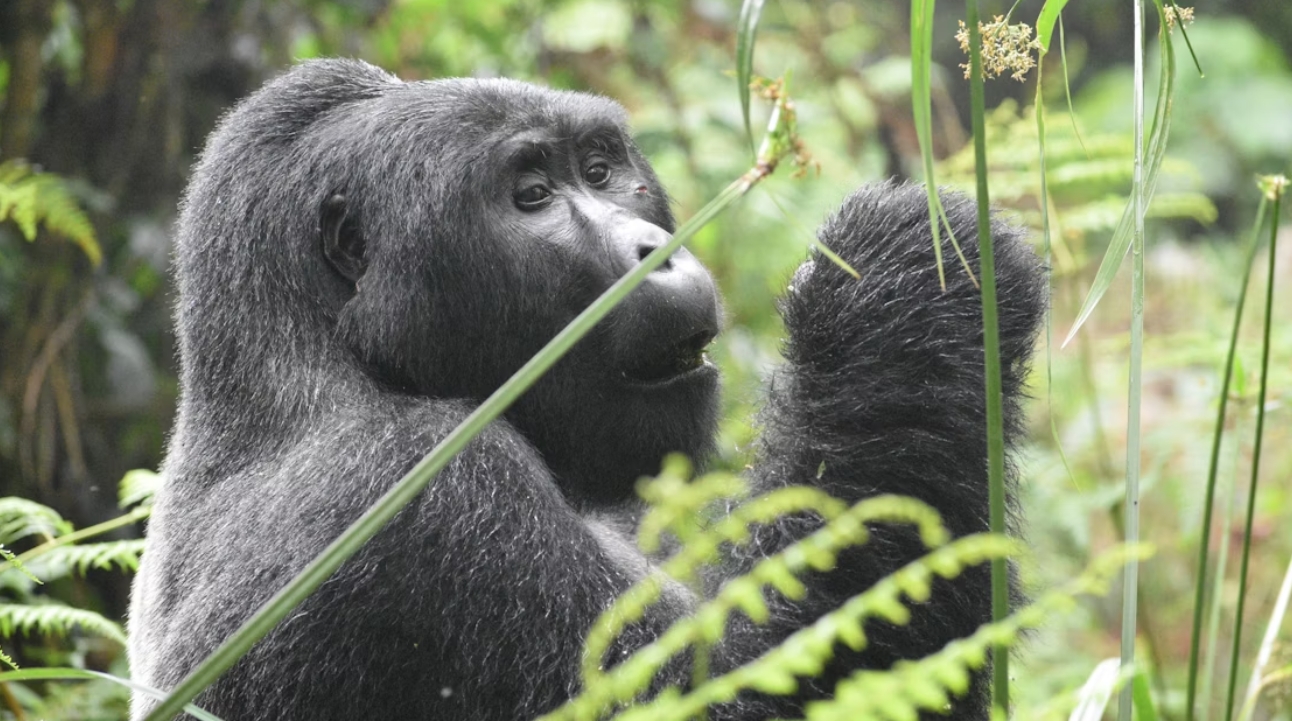
Restoration of Chimpanzees in Uganda
Restoration of Chimpanzees in Uganda: These endangered species are highly intelligent creatures known for their problem-solving abilities. They are very rare worldwide, prompting the Government of Uganda’s Ministry of Tourism, Wildlife, and Antiquities to come up with a conservation strategy. This strategy aims to support efforts to maintain chimpanzee populations, protect their habitats, and preserve the ecosystem services they provide. The goal is to ensure the long-term survival of chimpanzees in Uganda through effective conservation and management initiatives.
A campaign to conserve Uganda’s chimpanzee population has been launched, involving a coalition of organisations. This includes the Wildlife Conservation Society, Chimpanzee Trust, Uganda Wildlife Education Centre, Uganda Wildlife Authority, Ministry of Tourism, Wildlife and Antiquities, The Jane Goodall Institute, Uganda Biodiversity Fund, Ministry of Water and Environment, and National Forestry Authority. These groups are working together to protect and support the country’s chimpanzee population.
Chimpanzees, known scientifically as Pan troglodytes, are found across Africa, from West Africa to Tanzania and Uganda. A specific subspecies called the Eastern Chimpanzee (P. schweinfurthii) lives in countries like the Democratic Republic of the Congo, Uganda, and Rwanda. This subspecies has been extensively studied for over 50 years by researchers.
Restoration of Chimpanzees in Uganda
Chimpanzees are highly intelligent animals known for their problem-solving abilities. They are endangered worldwide, prompting the Government of Uganda’s Ministry of Tourism, Wildlife, and Antiquities to come up with a conservation strategy. This strategy aims to support efforts to maintain chimpanzee populations, protect their habitats, and preserve the ecosystem services they provide. The goal is to ensure the long-term survival of chimpanzees in Uganda through effective conservation and management initiatives.
A campaign to conserve Uganda’s chimpanzee population has been launched, involving a coalition of organisations. This includes the Wildlife Conservation Society, Chimpanzee Trust, Uganda Wildlife Education Centre, Uganda Wildlife Authority, Ministry of Tourism, Wildlife and Antiquities, The Jane Goodall Institute, Uganda Biodiversity Fund, Ministry of Water and Environment, and National Forestry Authority. These groups are working together to protect and support the country’s chimpanzee population.
Chimpanzees, known scientifically as Pan troglodytes, are found across Africa, from West Africa to Tanzania and Uganda. A specific subspecies called the Eastern Chimpanzee (P. schweinfurthii) lives in countries like the Democratic Republic of the Congo, Uganda, and Rwanda. This subspecies has been extensively studied for over 50 years by researchers, including Jane Goodall. Their research makes the Eastern Chimpanzee one of the most well-known chimpanzee subspecies.
Conservation Strategy for Chimpanzees in Uganda
Following the restoration of chimpanzees in Uganda, the funds raised from conservation initiatives are focused on projects that help repair damaged chimpanzee habitats. These projects include community-based conservation programmes for habitat restoration and protection, research and monitoring, conservation education, and reducing conflicts between humans and chimpanzees by supporting affected communities’ livelihoods. The main goal is to restore and protect chimpanzee environments.
The research shows that these animals often use tools, have babies every three to four years, and reach sexual maturity between the ages of nine and twelve. They are very similar to humans. They create various instruments to break open beehives or termite nests and then extract the termites or honey. This highlights their ability to regularly use tools, which is uncommon in the animal kingdom.
Surveys by the Wildlife Conservation Society and the Jane Goodall Institute found that Uganda has about 5,000 eastern chimpanzees. While the Democratic Republic of Congo (DRC) has the largest population, Uganda still holds a significant number of these chimpanzees, according to research from the late 1990s and early 2000s.
The Makerere University Biological Field Station (MUBFS) in Kibale National Park, the Budongo Conservation Forest Station (BCFS) in Budongo Forest Reserve, and the Institute for Tropical Forest Conservation (ITFC) in Bwindi Impenetrable National Park are key research facilities in Uganda studying chimpanzees. Research at these stations, along with studies from Tanzania (Gombe and Mahale), has greatly enhanced our understanding of chimpanzee biology. Research stations continue to focus on chimpanzees in Uganda, contributing valuable knowledge in the field.
Researchers such as the Wildlife Conservation Society biologist Andrew Plumptre have studied Eastern chimpanzee populations in their range. He estimates 5,000 in Uganda, 2,700 in Tanzania, 350 in Rwanda, and 450 in Burundi. This indicates that Uganda has significantly more eastern chimpanzees than the Democratic Republic of Congo (DRC), making it the country with the highest numbers of this subspecies after the DRC.
Activities
Chimpanzee conservation in Uganda is led by the Wildlife Conservation Society (WCS). For the last 15 years, WCS has focused on various projects aimed at habitat preservation and protecting chimpanzees in the country.
Environmental protection of key corridors
The text highlights the importance of protecting key forest areas in the Murchison-Semliki Landscape to benefit wildlife, especially chimpanzees in Budongo and Bugoma Forest Reserves. Surveys show that these chimpanzee populations are at risk and nearly not sustainable. To address this, plans are in place to maintain gene flow corridors that connect large forest areas. The Wildlife Conservation Society (WCS) has identified crucial corridors for the preservation of these species. Additionally, they are working with partners to create incentives for farmers and the community to help conserve these forests. These efforts aim to ensure the survival of both the chimpanzee populations and the forest ecosystem.
Chimpanzee population count
In Uganda, the Jane Goodall Institute and the Wildlife Conservation Society (WCS) conducted a national population study of a species in the late 1990s and early 2000s. The survey estimated that there are about 5,000 individuals of this species in the country. As a result of the survey, a conservation action plan was created to protect this species in Uganda.
Regional Restoration and Protection
Regional protection: For the International Union for Conservation of Nature (IUCN), we created an Eastern Chimpanzee Conservation Action Plan that covers the whole area. Regional conservation: We developed an Eastern Chimpanzee Conservation Action Plan across the entire range for the International Union for Conservation of Nature (IUCN).
Chimpanzee threats in Uganda
Chimpanzees in Uganda face various threats based on their location. In Central Forest Reserves and National Parks, the biggest danger is accidental snaring in wire traps meant for ungulates, which can injure or kill them. Approximately 20% of chimpanzees in Budongo Forest and Kibale National Park have suffered injuries from these snares. Additionally, chimpanzees near protected areas may be targeted due to crop raiding, which adds to their risk. Overall, the threats vary significantly, affecting chimpanzees differently depending on their habitat.
Many chimpanzees are trapped in leg-hold traps or speared to deter them. As human populations grow, those living outside protected areas face habitat loss from agriculture. The disease is another risk, as research in Kibale National Park shows that the gut parasites of chimpanzees are similar to those found in nearby people, including researchers and tour guides. Overall, chimpanzees are threatened by both habitat loss and disease due to their close interactions with humans.
In conclusion, following the restoration of chimpanzees in Uganda, chimpanzees rely on us for their survival, and we need your help to give them hope for the future. Each person can make a difference. Support our chimpanzee conservation efforts by donating and visiting various chimpanzee destinations. These animals are in danger of extinction, and their survival depends on our actions. Join us in this important mission to help save these critically endangered relatives.