What are the Rules for Photographing Gorillas in Rwanda?
What are the rules for photographing gorillas in Rwanda? Wildlife photography, particularly of mountain gorillas, is one of the outstanding and exciting wildlife experiences that offers unforgettable adventure worldwide. The country, commonly known as the land of a thousand hills, offers diverse adventure experiences, such as gorilla and chimpanzee trekking, that attract photographers from around the globe.
However, the country is rigorous on photography rules during the trekking experiences, particularly during chimpanzee trekking. This is due to their sensitive nature during human encounters. The significance of these rules is to protect gorillas’ health, preserve natural behaviour, and ensure visitor safety.
What are the Rules for Photographing Gorillas in Rwanda?
Following the rules for photographing gorillas in Rwanda, why these rules exist, what equipment is allowed, and how travellers can take incredible photos while respecting conservation guidelines—all those details are included in this article. On average, many gorillas share approximately 98% of their DNA with humans, meaning it is realistic that they share human diseases, and this increases the risk of disease transmission.
That is why, by law, sick travelers are not allowed to trek. Photography rules are not about limiting enjoyment; they are about responsible tourism. These strict regulations are fundamental in responsible tourism, whereby they help to prevent disease transmission, reduce stress and behavior disruption, maintain safe distances, and ensure ethical treatment of gorillas for future generations.
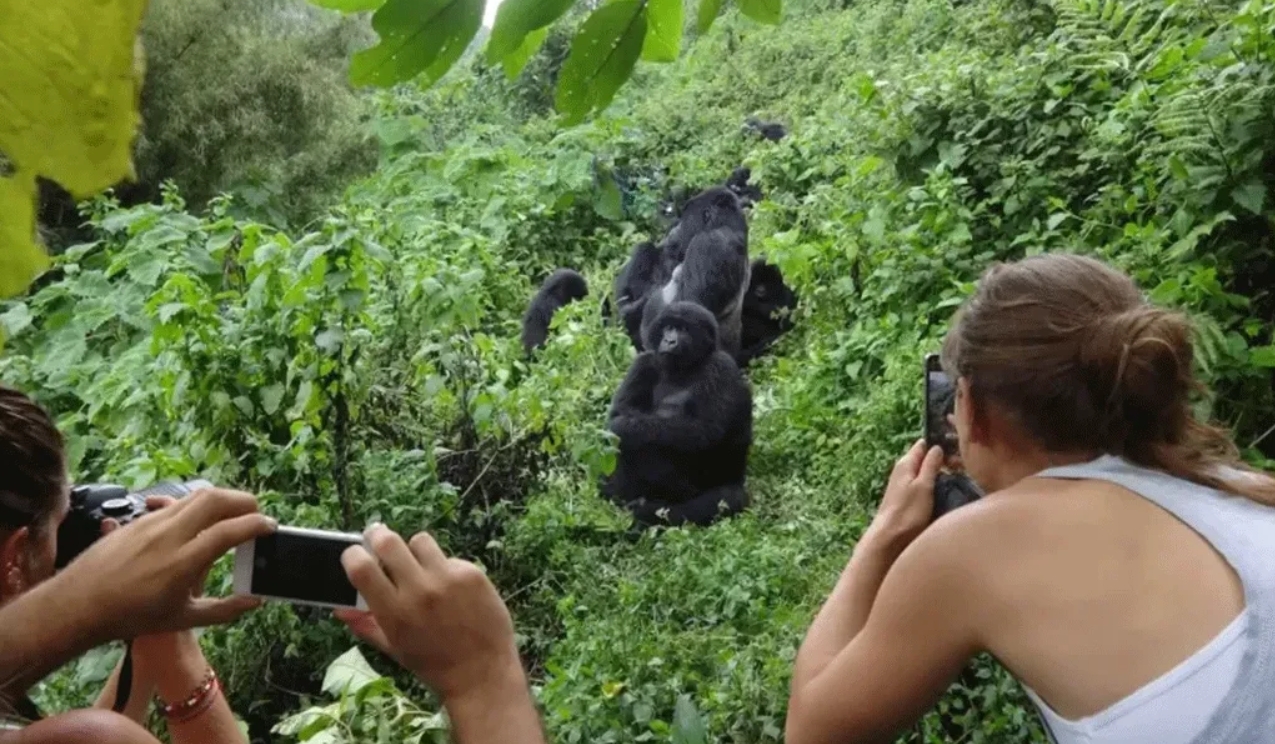
Following the rules for photographing gorillas in Rwanda, the photography guidelines reflect global best practices in wildlife conservation. Visitors must remain 7 meters away from the gorillas at all times. This rule applies equally when observing, photographing, and filming. Photographers are not allowed to move closer for better shots.
Flash photography is not allowed because flash can startle or stress gorillas; sudden light may provoke defensive reactions; repeated flashes disrupt natural behavior, and stress weakens gorilla immune systems. Rangers will immediately intervene if flash is used.
Visitors may use DSLR and mirrorless cameras, compact digital cameras, smartphones, and action cameras. These are some of the restrictions on camera type, provided all rules are followed. Since the flashlight is strictly forbidden and light situations can be a little difficult, photographers are advised to plan accordingly.
The suggested camera settings include high ISO capacity, wide aperture, fast shutter speed for movement, and silent or quiet shutter mode. Preparing settings beforehand prevents unnecessary movement during the encounter. Contrary to expectations, extreme zoom lenses are not required.
Following the rules for photographing gorillas in Rwanda, an ideal lens range includes 70 to 200 mm, which is sufficient; 24 to 70 mm for environmental shots; and prime lenses for low light. Gorillas are large animals and often appear closer than expected. While photographing, move slowly, stay quiet, follow the ranger’s positioning, observe the gorilla’s body language, and lower your camera if a gorilla looks uncomfortable.
However, while photographing, you should not move suddenly for angles, block a gorilla’s path, crowd other visitors, touch vegetation aggressively, or chase moments for photos. Patience results in the best images. With only 8 visitors per group, cooperation is essential to take turns when positioning, avoid blocking others’ views, be aware of your surroundings, and keep the camera bags minimal.
Rangers manage positioning to ensure fairness. This can happen, especially with curious juveniles. This is what is required: stop moving, avoid eye contact, lower your camera slightly, and let the rangers guide you. Do not attempt close-up shots or selfies.
Considering the rules for photographing gorillas in Rwanda, photography rules are closely tied to health protocols. Do not photograph if you are sick, cover your mouth when you cough or sneeze; some treks require face masks; and maintain distance at all times. These measures protect gorillas from illness.
Following the rules for photographing gorillas in Rwanda, photography is only allowed during the one-hour gorilla viewing period, and no photography is permitted before gorillas are officially reached and after the hour ends. Rangers strictly monitor time. Video recording is allowed with the same restrictions as photography.
No flash or bright lights, no loud camera noises, no moving too close, no drones. Drones are completely prohibited because of noise disturbance, safety concerns, stress to gorillas, privacy, and conservation regulations. Failure to abide by these rules and regulations, such as the use of drones during photography, may call for certain penalties.
Rwanda, as a country, has embraced ethical photography that focuses on animal welfare over photos, natural experience, restoration of natural habitats over staged moments, and wildlife preservation over trending social media. The revenue collected from issuing permits and responsible photography is used to finance veterinary care, support ranger patrols, finance research, and benefit local communities in different aspects.
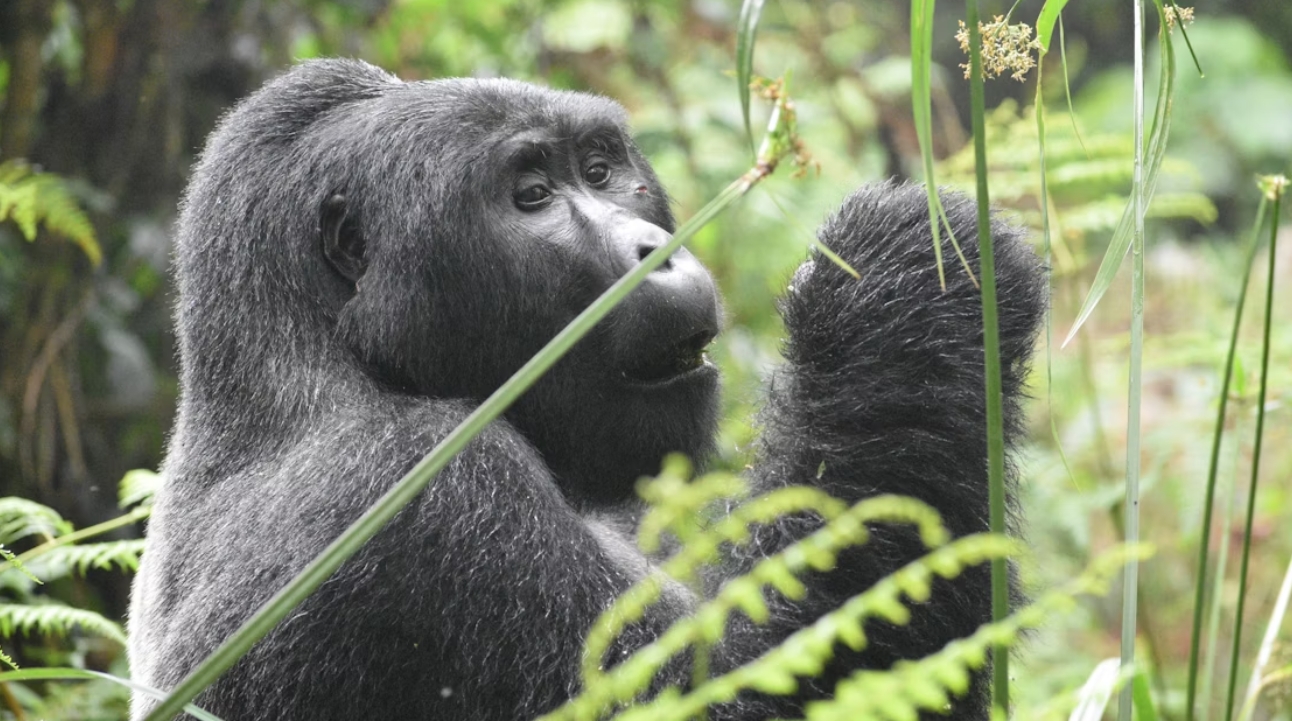
Considering the rules for photographing gorillas in Rwanda, every photograph taken responsibly contributes to conservation success. These are some of the tips for capturing powerful gorilla photos, and these include focusing on eyes and expressions, capturing interactions, not just portraits, including the environment for storytelling, and taking breaks from shooting to observe and respect the moment. Some of the most memorable experiences are not captured on camera.
Conservation: What are the Rules for Photographing Gorillas in Rwanda?
Considering the rules for photographing gorillas in Rwanda, the best gorilla photographs are those taken with patience, respect, and a deep appreciation for the privilege of being in their presence. However, the crucial notes to ensure the safety of both parties include maintaining a 7-metre distance, no flash photography, no drones, photography strictly done in the one hour given, and following the guidelines all the time as given by the ranger.
Rwanda emerges as one of the top destinations due to its conservation efforts and is a pioneer of responsible tourism. This comes as a result of its strict laws, especially on gorilla encounters, such as small group sizes, professional guidance from rangers, high success rates, and well-habituated gorilla families. Rwanda’s photography rules ensure that gorilla trekking remains safe, respectful, and sustainable.