Location of Queen Elizabeth National Park
Location of Queen Elizabeth National Park: In Africa’s eastern part of the continent, Uganda, a country in East Africa, is home to Queen Elizabeth National Park, spanning the districts of Kasese, Rubirizi, Rukungiri, and Kamwenge are in the western part of the country. The park is located on the border with the Democratic Republic of Congo in the western arm of the Great East African Rift Valley, adjacent to Kibale Forest National Park and Rwenzori National Park in Uganda. By road, Queen Elizabeth National Park is 400 kilometres from Kampala and 440 kilometres from Entebbe, sharing borders with Virunga National Park in the Democratic Republic of the Congo.
The park’s 3898 square kilometres are covered by riverine and savannah grassland. In 1952, it was gazetted to safeguard several wildlife species that had been spotted in the park. Currently, 600 bird species, 10 primates, and 95 animals can be seen participating in various behaviors within the protected area.
What attractions are found within Queen Elizabeth National Park?
Animals
Following the Location of Queen Elizabeth National Park, there are 95 mammal species, including large mammals, and 10 primate species, including chimpanzees, in Queen Elizabeth National Park. The park boasts the largest population of tree-climbing lions and is one of just two national parks that support them. Only the branches of large fig and acacia trees in the park’s Ishasha area are home to the tree-climbing lions.
The majority of Queen Elizabeth National Park’s sections, including Ishasha, the Mweya Peninsula, and the Kasenyi Plains, are home to the park’s fauna. Game drives, nature walks, and boat rides on the Kazinga Channel are among the ways to see the animals. These animals can be observed going about their daily lives, which include hunting, sleeping, mating, feeding their young, and much more.
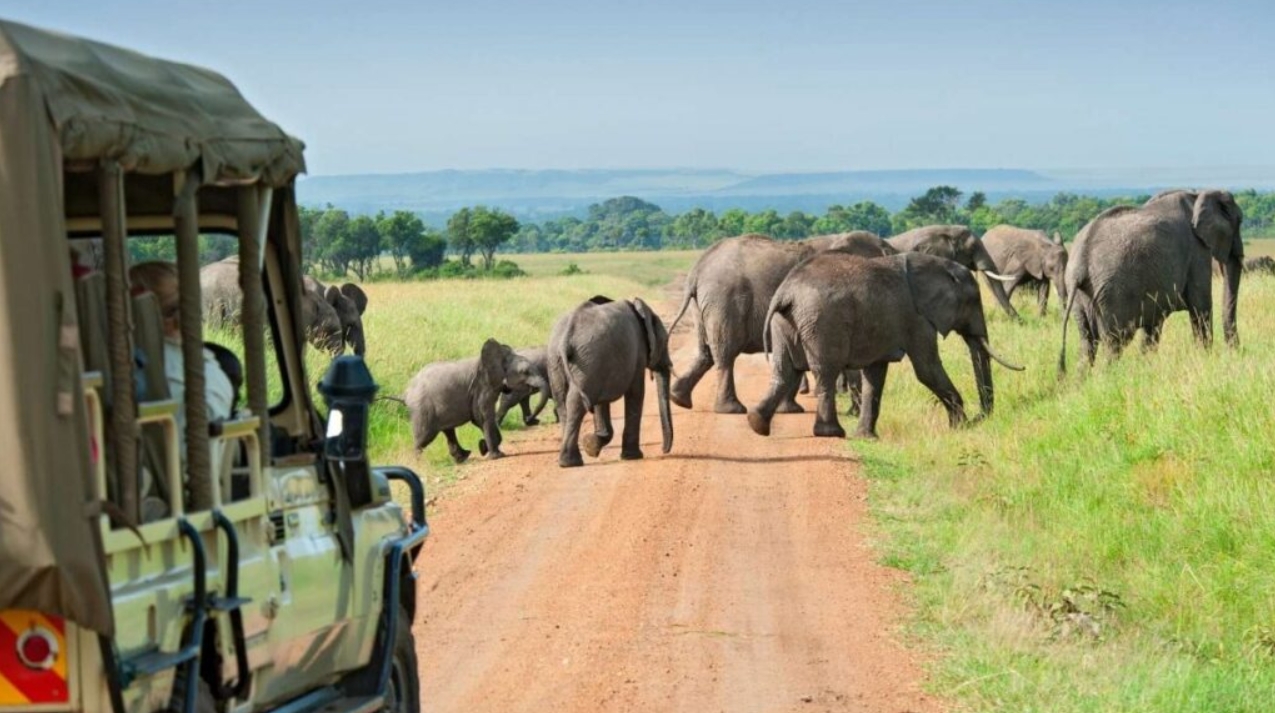
The park offers a wide range od mammal species such as spotted hyenas, leopards, lions, elephants, giant forest hogs, jackals, genet cats, sitatungas uganda kobs, buffalos, hippos, bushbucks, aardvarks and several primates such as blue monkeys, chimpanzees, red-tailed monkeys, L’hoest monkeys., black and white colobus monkeys, baboons, mangabeys, bush babies, among others.
Birds
Following the park’s diverse habitats of plain savanna, woodlands, marshes, and riverine areas, such as along the Kazinga channel, Kasenyi, Kikorongo, Mwea Peninsula, Lake Katwe, Maramagambo Forest, Katunguru, and Ishasha sector, all of which offer exceptional sightings for birdwatching, attracting several birdwatchers and nature enthusiasts to explore the park’s treasure trove of birdlife.
Species to see include Scimitar Bill, Black-winged Kite, African Grey Hornbill, Tawny Eagle, Dark Chanting Goshawk, Vinaceous Dove, Bearded Woodpecker, Long-crested Eagle, White-thighed Hornbill, Southern Carmine Bee-eater, Olive Bee-eater, Northern Ground Hornbill, Black-winged Kite, Grey Pratincole, Grasshopper Buzzard, Plain Greenbul, among others.
Other species to see include Red-capped Robin Chat, Village Indigo Bird, Black-throated Wattled-eye, Black-headed Oriole, Lesser Stripped Swallow, Black Cuckoo Shrike, Northern Fiscal, Moasque Swallow, Pin-tailed Whydah, Purple-banded Sunbird, Banded Martin, Spot-flanked Barbet, and Crested Malimbe, among others.
Kazinga channel
Kazinga Channel is the largest water channel connecting two lakes of Edward and Lake George on to which the boat cruise tours takes place, the channel offers scenic views with unique wildlife species both land and acquatic species such as crocodiles, hippos, elephants, monitor lizards, and several antelopes which are often seen a long the channel banks quenching their thirsty. Visitors can observe a variety of wildlife while exploring, including antelopes, buffalo, elephants, crocodiles, water birds, hippos, and many more grazing animals along the canal.
How to access the Park
Following the Location of Queen Elizabeth National Park, to travel to the park, visitors from outside of Uganda must fly to Entebbe International Airport, where they can select their mode of transportation. Entebbe is 440 km away from Queen Elizabeth, which is reachable by car or aeroplane. Travellers can take an aeroplane from Kajjansi Airport or Entebbe International Airport to Mweya Airport.
Travellers from Entebbe can reach Queen Elizabeth National Park by car in 7-8 hours, passing through Rubirizi, Masaka, Mbarara, and Kampala. The park may be reached via the second route, which passes through Kampala, Mubende, Fort Portal, and Kasese. Although road transportation is lengthy, travellers can enjoy breathtaking views of the sights as they go.
Best time to visit Queen Elizabeth National Park
As one of the regions near the equator, Queen Elizabeth National Park is accessible year-round due to its consistently mild temperatures on most days. Since there is little to no rainfall throughout the dry season, which runs from June to September and December to February, the best experience is during these months. In the dry season, the park’s game tracks are always dry, making their accessibility easier, together with roads connecting to the park, with short and sparse vegetation, hence offering scenic views for wildlife.
Besides the dry season, travellers, particularly those who enjoy bargains, should consider visiting Queen Elizabeth National Park between March and May and between October and November, when it rains. However, during the rainy season, the park receives torrential rains, which affects the nature of the roads, making them muddy, slick, and slippery. More still, the vegetation is always thick and tall, which blocks the visibility of wildlife species.
Being near the equator, the park receives moderate temperatures, which makes the park accessible throughout the year. This means that the park receives intermittent rains during the dry season, which occurs from June to September and also from December to February, making the roads and trekking trails dry and easily accessible. However, the problem with the rainy season is that too much rainfall received in the park affects the roads leading to the tracking trails, making them muddy and slippery, leaving them in bad shape. More still, the thick vegetation makes it difficult to see the wildlife.