Ishasha Tree Climbing Lions in Queen Elizabeth National Park
Ishasha Tree-Climbing Lions in Queen Elizabeth National Park is one of the few parks in Africa where tourists can view the unique behaviour of lions climbing trees. People in Kenya and other African countries have reported seeing lions climb trees, but the tale does not seem to be as clear as it is in Queen Elizabeth Park, since the lions they see are usually young lions playing around tree branches. However, Lake Manyara National Park in Tanzania and Kruger National Park in South Africa are also home to tree-climbing lions.
Although they can be found in other national parks, such as Kidepo Valley National Park and Murchison Falls National Park, lions do not climb trees like those in Queen Elizabeth National Park. The southern portion of Queen Elizabeth National Park’s Ishasha Sector is home to tree-climbing lions. It is uncommon for lions to climb trees.
What makes tree-climbing lions in Ishasha unique?
Tree-climbing lions are seen slowly lounging on the tree branches, also resting up there. Research reveals the reasons why lions in these Ishasha savannah plains climb up the tree branches include the following:
Run away from the insect bites. The breeding tsetse flies that sting the wild residents, lions among them, invade the grounds during the rainy season. This causes the lions to run to the tree branches to shield themselves from the multitude of ground-dwelling insects.
Escaping the ground heat. At the change of the seasons, the savanna usually exhibits rather high temperatures over 28 degrees Celsius or 80 degrees Fahrenheit. For the cats, this heat makes the Earth quite hot. The tree branches have cooling-off spots that luckily come to them.
Cool view of the magnificent fare for these big cats. When on a high level, it is evident that a perspective is broader than what you want to see. While eating in the grasslands, the lions ascend the tree limbs to get a view of their food, the antelopes.
Given the aforementioned considerations, the lions in the Ishasha sector in the south of Queen Elizabeth National Park are “tree climbing”.
The climbing lions are drawn to the widely branched (candelabrum) trees found in Queen Elizabeth National Park. Acacia trees and sycamore fig trees. These kinds of trees are ideal for resting, as they are broad enough, offering a very cosy, vast area, and are a great protection for the lions in the rainy season.
From the candlestick thorns and humid rainforests to the savannah vegetation, the park is a diverse habitat that favors most wildlife species, including several antelopes like Uganda kobs, waterbucks, topis, warthogs, and many other species that are observed roaming in the Ishasha sector, Kasenyi plains, Kazinga channel, lakes, and in the scattered areas of the park, including the chimpanzees at Kyambura Gorge and other primates.
The tree-climbing lions only climb the trees in the morning when the sun rises. Commonly ascended trees are acacia and sycamore fig trees. The manes of the male lions of Queen Elizabeth are black.
Meeting the extraordinary, unique lions of Queen Elizabeth is a once-in-a-lifetime experience you will not forget, especially if you take enough photos as they lazily lie in the tree branches or when catching their prey. Because it offers enough cover from the heat and during rainy seasons, the sycamore fig tree benefits the tree-climbing lions.
What makes Queen Elizabeth National Park the best place for tree-climbing lions?
The world tourist sector’s appreciation of Ishasha, the southern region of Queen Elizabeth National Park, comes from tree-climbing lions. Thousands of international visitors visit the national park to see the tree-climbing lions. For the visitors to East Africa, they are a star attraction and a stunning experience.
Rare to find are the tree-climbing lions in Lake Manyara, Tanzania, which may give a visitor the negative perception that “maybe it’s only a myth that there are tree-climbing lions in Africa.” It is a must for a tourist who travels to the area to identify quite a number of them, unlike Ishasha in Queen Elizabeth National Park.
The visitors are speechless and stay astonished when they arrive at Queen Elizabeth National Park’s strangely behaving cats (tree-climbing lions) that climb to the top of the trees and cuddle up there with much ease. A visitor could reach a spot with around 50 lions napping in the trees.
You will confidently verify the distinctive feature of the big cats of Ishasha discovered in Queen Elizabeth National Park, Uganda, when you spot the leopards climbing the tree during one of your game drives.
To properly digest their food after a day’s hunting, they hung lazily from the tree limbs to rest. They are also seen enthusiastically watching the tiny creatures foraging on the ground. Therefore, the trees provide the lions not only a calming reception but also a spying site for their next raid.
Threats
A growing human population close to the park poses several risks to tree-climbing lions in Ishasha. On April 10, 2018, for instance, 11 lions were discovered lying dead in Ishasha. They are claimed to have discovered insect poison in their caucus.
Among other causes, natural deaths and cub killings by the dominant male, among others, are driving down the population of these rare, gifted, tree-climbing lions in Queen Elizabeth National Park.
Even if these lions are in danger, they are still a major draw for visitors to this forest in Africa. Still “the king of the jungle”, it is their historical pride that nobody can alter.
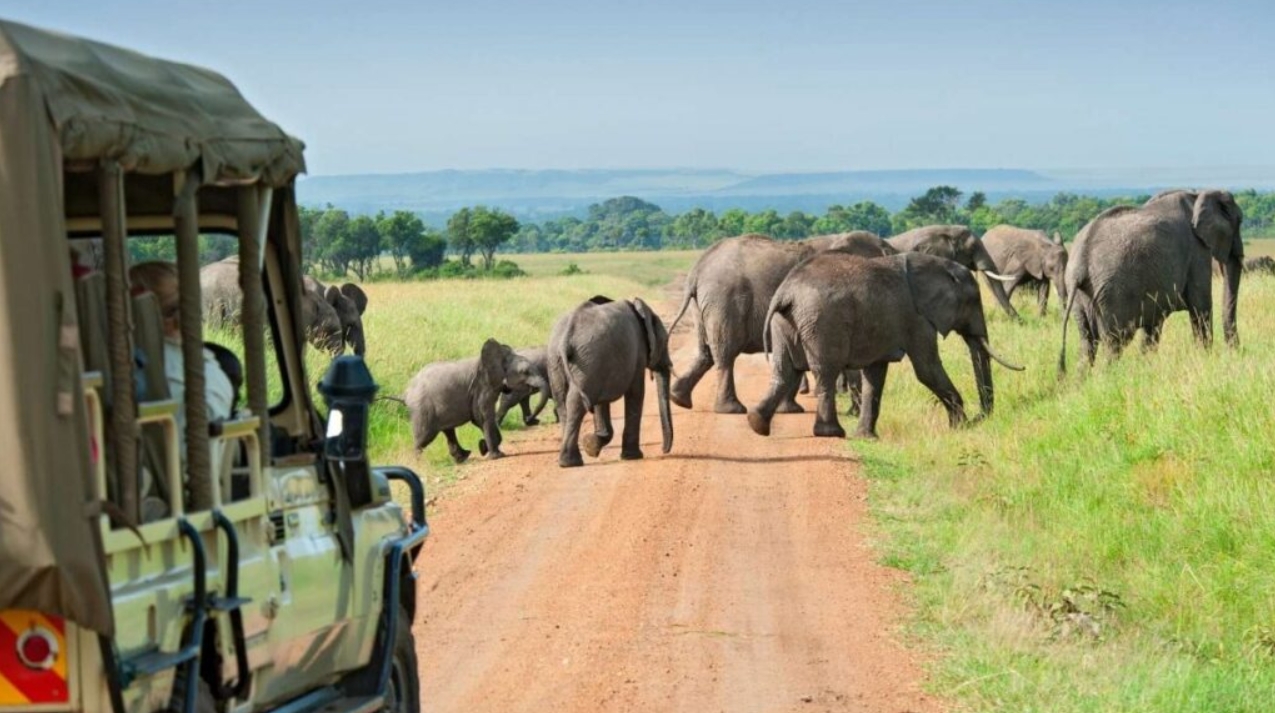
Apart from the distinctive tree-climbing lions, Queen Elizabeth has other African big cats, including leopards, and also other species like buffalo, hyenas, antelopes, elephants, and many more.
Conclusion
Besides the Ishasha tree-climbing lions in Queen Elizabeth National Park, the Rwenzori Mountains, known as the Mountains of the Moon, offer stunning views and beautiful crater lakes like Lake Edward and Lake George, connected by the Kazinga Channel filled with hippos, crocodiles, and elephants. Visitors can trek in the Kyambura Gorge to see chimpanzees, explore local fishing villages, enjoy dances, and shop for handmade crafts.