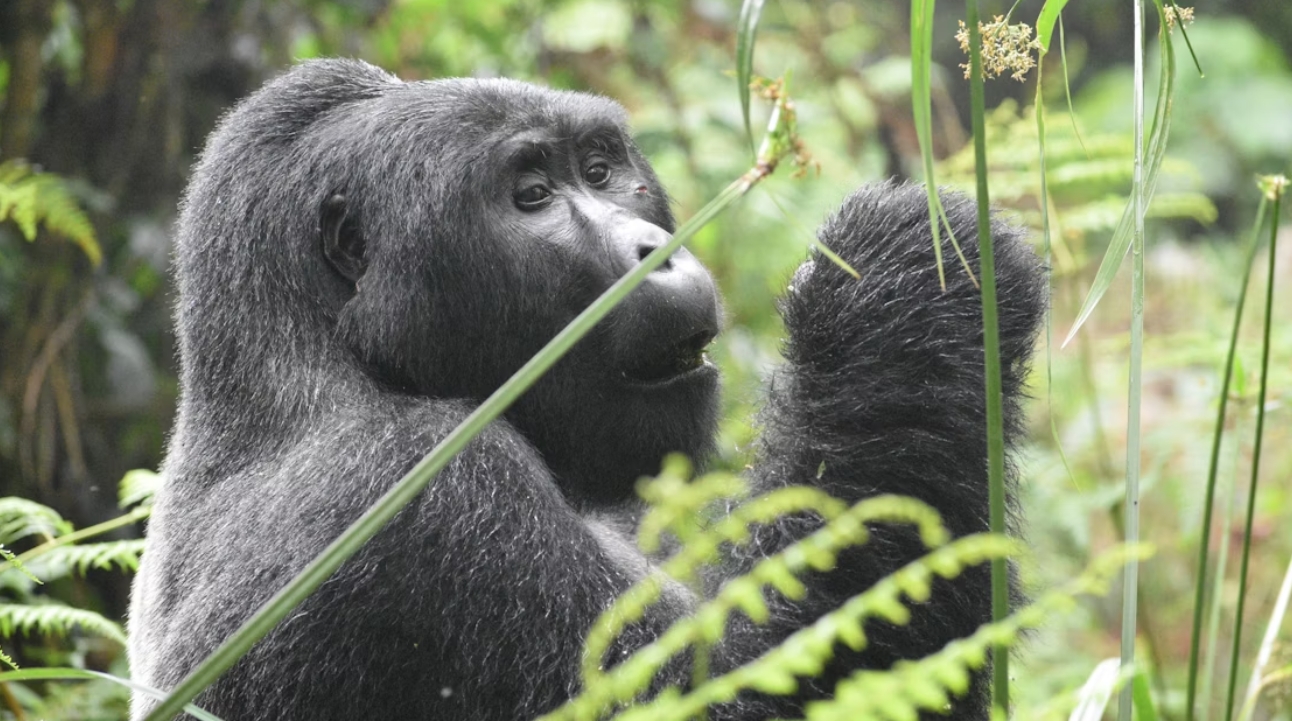
How Long Does it Take To Find Gorillas in Rwanda?
How Long Does It Take to Find Gorillas in Rwanda? Since gorillas roam freely through dense rainforest and mountainous terrain, there is no fixed answer. Visitors should know that every trek is exceptional, and the time taken to locate these mountain gorillas varies depending on logistical and natural factors. However, due to the fact that Rwanda is one of the top gorilla trekking destinations globally, it has a highly desired and organized primate tracking system that is indeed very successful and predictable within a given rational range.
This article provides a detailed explanation of how long it usually takes to find gorillas in Rwanda, what influences trekking duration, and how travelers can prepare for varying trek lengths. In Rwanda, the gorilla trekking experience takes place in Volcanoes National Park, the only gorilla park, which is part of the wider Virunga range that consists of several volcanoes that are shared with Rwanda, Uganda, and the Democratic Republic of Congo.
How Long Does it Take To Find Gorillas in Rwanda?
The park boasts various fully habituated gorilla families that are open for gorilla trekking activities, each managed and monitored daily by skilled, professional trackers and park rangers. Unlike zoo experiences, gorilla trekking involves hiking through natural forest, following fresh gorilla signs, and adjusting routes based on real-time movement.
In Rwanda, it usually takes 30 minutes to 6 hours to find the gorillas. The most common duration is 2 to 4 hours of trekking before encountering the gorillas. Once the gorillas are found, visitors are allowed to spend one hour observing them. Several factors influence how long it takes to find a gorilla family on any given day.
Factors that Influence Gorilla Sightings in Rwanda
Location of the gorilla family, that is to say, gorillas move daily in search of food and suitable resting areas. Some families remain close to the park boundary; others move higher up the volcanic slopes.
Gorillas may travel several kilometers overnight. Families closer to the trailheads are reached faster, while those deeper in the forest require longer treks. Work of advance tracking system, that is to say, trackers enter the forest early in the morning, often before sunrise; they locate each gorilla family using footprints, broken vegetation, dung, feeding remains, and nesting sites.
Trackers communicate the gorillas’ location to rangers via radio. Thanks to this system, trekkers are not wandering blindly; they are guided toward a known location. Weather conditions, that is to say, weather, can affect trekking speed and duration in these ways.
Rain makes trails muddy and slippery, dense fog can slow down progress, and wet vegetation may require detours. During rainy seasons, trekking may take longer, even if gorillas are nearby. Terrain and altitude, that is to say, Volcanoes National Park features steep volcanic slopes, dense rain forest, bamboo zones, and high altitudes.
Higher altitude treks are physically demanding and often slower, extending trekking time. For group fitness levels, rangers adjust the trekking pace based on the group’s ability; that is to say, a slower pace for older travellers, frequent rest stops if needed, and safety and comfort prioritised over speed.
This can lengthen the trek but ensures a positive experience and safety for everyone. While you cannot guarantee a specific trek length, there are ways to influence it. During the morning briefing, travellers may inform the rangers about their health considerations and age. Fitness levels.
Rangers may assign a gorilla family closer to the boundary when possible. However, gorilla movements are unpredictable, and assignments depend on availability and conservation needs. Once trackers confirm the group is near the gorillas, trekkers leave the main trail and move slowly and quietly through vegetation; cameras are prepared, and the final approach is guided carefully.
What to do Upon Seeing Gorillas
At this point, trekking stops, observation begins, and the one-hour viewing time starts. The physical effort quickly fades as the encounter unfolds. No matter how long it takes to find the gorillas, the viewing time is always 1 hour, strictly enforced for conservation reasons.
During this one hour, visitors can observe gorilla behavior, watch mothers with infants, see feeding, grooming, and social interactions, and take photographs without a flashlight. Because trekking time can vary widely, preparation is essential. Physical preparation, that is to say, being ready for several hours of walking, walking at a steady, comfortable pace, and taking rest breaks as needed. Mental preparation, that is to say, embrace the adventure, expect unpredictability, and focus on the journey, not just the destination.
Hiring a porter is essential when treks are longer because they help to carry your backpack, help on steep or muddy sections, reduce fatigue, and increase overall comfort. For longer treks, porters can make the difference between exhaustion and enjoyment. Depending on how long it takes to find the gorillas, treks typically end between 11:00 AM and 4:00 PM.
Expectations
Late finishes are normal, especially for families located deep in the forest. Travellers should avoid scheduling tight plans for the afternoon. The freedom granted to mountain gorillas to roam freely without man’s interference guarantees long-term conservation progress, more authentic experiences, and healthier gorilla populations.
The variability is a sign of responsible tourism, not inefficiency. Thanks to daily monitoring, that is to say, gorilla trekking success rates are extremely high, almost all treks result in gorilla encounters, and time spent searching is purposeful, not random. Rwanda is considered one of the most reliable destinations in the world for gorilla trekking. Each step through the forest builds anticipation, connection, and appreciation for the environment that sustains these incredible animals.