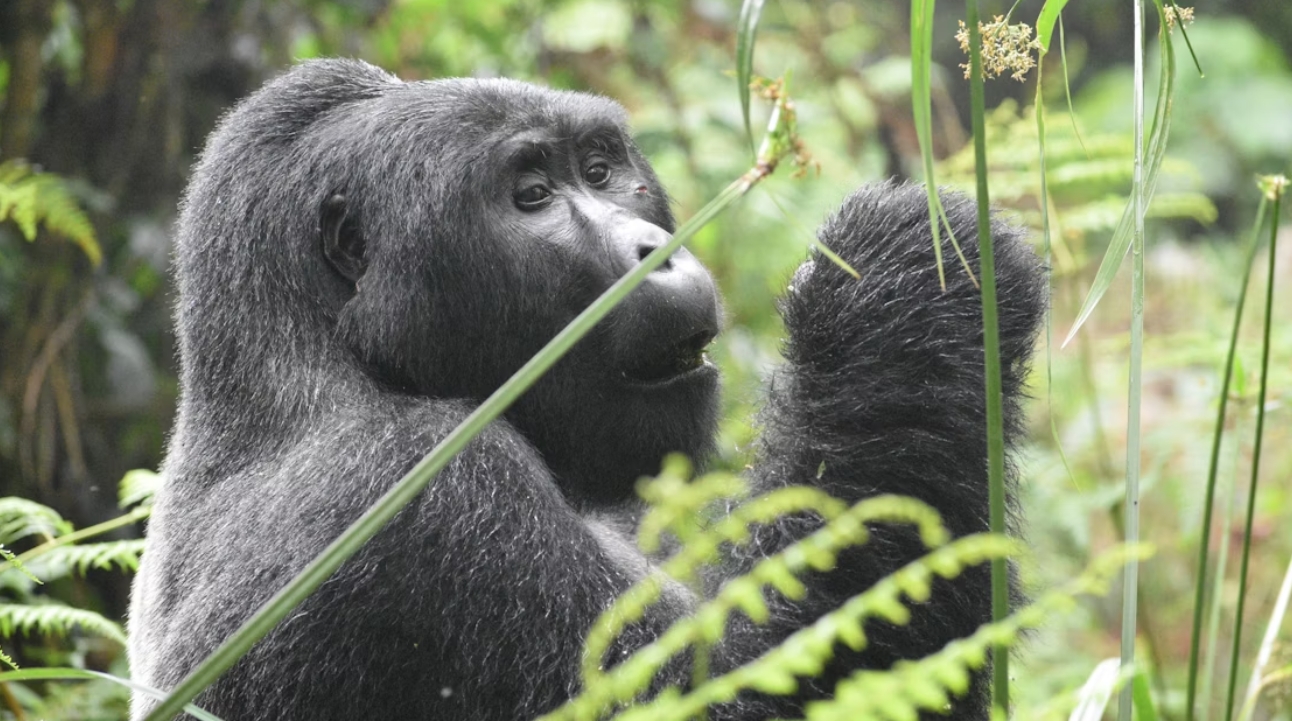
Gorilla Trekking and Batwa Forest Experience
Gorilla Trekking and Batwa Forest experience are thrilling adventures that allow visitors to see mountain gorillas in their natural habitat by trekking through the dense jungles. For this experience, Uganda is a great option, especially in the Mgahinga National Park and Bwindi Impenetrable National Park. It is easy to combine trekking with a trip to Rwanda because the two nations are only a short drive apart. The earliest people to reside in this rainforest were the Batwa, also referred to as “The Keepers of the Forest”, who coexisted peacefully with the gorillas for thousands of years until the forest was designated a national park in 1992. Approximately 350 endangered mountain gorillas can be found in the park, which is now a World Heritage Site.
Following gorilla trekking and the Batwa forest experience, trekking is a thrilling experience that allows visitors to see mountain gorillas in their natural habitat by walking through impenetrable forests. For this experience, Uganda is a great option, especially in the Mgahinga Forest and Bwindi Impenetrable National Park. It is easy to combine trekking with a trip to Rwanda because the two nations are only a short drive apart. The earliest people to reside in this rainforest were the Batwa, also referred to as “The Keepers of the Forest”, who coexisted peacefully with the gorillas for thousands of years until the forest was designated a national park in 1992. Approximately 350 endangered mountain gorillas can be found in the park, which is now a World Heritage Site.
Gorilla Trekking and Batwa Forest Custodians
Through the Batwa people, sometimes known as pygmies, visitors can learn about African culture in Uganda through the Batwa cultural experience. The Batwa, who formerly occupied Mgahinga National Park and Bwindi Impenetrable Forest, were forest keepers who hunted and collected medicinal herbs. Clad in leaves and animal hides, they lived in houses and tunnels. But in 1990, the Batwa were forced out of these national parks by the Ugandan government to save the endangered mountain gorillas. Because they were evicted without being compensated, the Batwa were forced to adjust to life outside of the jungle.
Following gorilla trekking and Batwa forest experience, the Batwa, who have been living on the forest’s edge for more than 35 years, nonetheless treasure their time spent in the woods. Visitors can visit their communities, where local elders tell stories in their native tongue while English-speaking guides provide translations. The history and cultural customs of the Batwa people, who were hunters and gatherers, are taught to visitors. The Batwa people live in substandard conditions in comparison to other Ugandan tribes, despite their rich cultural legacy.
They still collect firewood and charcoal for sale, hunt illegally when they can, and live in grass-thatched huts. However, the government enforces strict laws to stop forest encroachment, but nearby Bakiga farmers assist the Batwa by teaching them how to grow crops like potatoes, cassava, and maize. Visitors are able to tour various Batwa residences and see their lifestyles.
Gorilla trekking destinations in Africa.
Following gorilla trekking and Batwa forest experience, a UNESCO World Heritage site, Bwindi Impenetrable National Park is home to more than half of the world’s mountain gorillas. Each of the park’s four sectors of Buhoma, Ruhija, Rushaga, and Nkuringo has a unique trail suitable for hikers of all skill levels. With a single habituated gorilla family, beautiful volcanic scenery, and golden monkeys, Mgahinga Gorilla National Park is smaller but no less significant. Rwanda, Uganda, and the Democratic Republic of the Congo are home to mountain gorillas. Mgahinga, Bwindi, Volcanoes National Park, and Virunga National Park in the Democratic Republic of the Congo are important gorilla habitats.
Why Choose Uganda for Gorilla Trekking?
Uganda offers a unique gorilla trekking experience and is among the safest countries in Africa for tourists. Being surrounded by stunning scenery and many cultures, seeing gorillas in their natural habitat can change your life. Furthermore, there are numerous trekking alternatives. Many people come from all over the world to undertake gorilla trekking in Uganda because of the opportunity to spend peaceful time with mountain gorillas as they study their behaviours and social structures, such as feeding and nurturing their young ones, among others.
Why Uganda should be your top choice for gorilla trekking:
Bwindi Impenetrable National Park and Mgahinga Gorilla National Park are home to over half of the world’s mountain gorillas. Compared to other locations, you have a better chance of spotting these creatures here. Gorilla permits are available in four hiking sectors in Bwindi (Buhoma, Ruhija, Nkuringo, and Rushaga) and one in Mgahinga, depending on your fitness level and where you stay. The scenery and trekking experiences vary by sector.
Following gorilla trekking and Batwa forest experience, permits for gorilla trekking are less expensive in Uganda ($800) than in Rwanda ($1500), making it more affordable for tourists. Campsites, low-cost lodges, opulent eco-lodges, and villas are among the lodging options close to Bwindi and Mgahinga. Uganda offers various national parks in the area for wildlife safaris, where tourists can observe gorillas as well as other animals like elephants, lions, leopards, buffaloes, and a variety of birds.
In Uganda, gorilla trekking takes place in rural areas, giving tourists a chance to experience local cultures and discover their traditions and conservation initiatives. This is a one-of-a-kind excursion that uses sustainable tourism to help save the endangered mountain gorillas. An unforgettable Ugandan safari experience that promotes animal conservation is provided by taking part in this excursion.
Regulations for gorilla trekking
Before starting a gorilla hike, it is crucial to wash your hands, wear a mask, and speak quietly. Feeding wildlife, including fruits and snacks, is not allowed to protect animals and their habitats. Littering is also prohibited, so make sure to carry your trash with you. Each morning, the guidelines for gorilla trekking will be explained, and then visitors will be divided into groups led by a ranger into the forest. It is important to follow all rules, remain calm, and remember that gorillas are wild animals.
Following gorilla trekking and Batwa forest experience, the Uganda Wildlife Authority works to protect mountain gorillas, which were once endangered due to habitat loss and poaching. This situation also impacted local communities, such as the Batwa, who were removed from their homes in national parks to conserve the gorillas. The Batwa people, one of Uganda’s oldest groups, have lived outside the forest for over 35 years but still cherish their jungle life. Tourists can learn about their history and traditions through storytelling sessions led by elderly Batwa, with local guides translating into English.
What to carry for the gorilla habituation experience?
A camera, insect repellent, gardening gloves, a water bottle, hiking shoes, a long-sleeved shirt and pants, a waterproof rain jacket, a warm sweater, energy-boosting snacks, a walking stick, binoculars, face masks, and a backpack are some essentials for a gorilla habituation safari in Bwindi Impenetrable National Park.
How to get to Bwindi Impenetrable National Park
Following gorilla trekking and Batwa forest experience, you must book either scheduled or charter domestic flights with Aerolink Uganda from Entebbe International Airport to Kihihi or Kisoro Airstrip to get to the enchanted Bwindi Impenetrable National Park in southwest Uganda. From Kisoro Airstrip, you must then make your way to Bwindi via car. Road transport is another way to get to the Bwindi Impenetrable National Park. In a safari vehicle, travellers will travel from Kampala through Masaka, Mbarara, Kabale, and finally Bwindi Impenetrable National Park, which takes about eight to ten hours. From Kigali, Rwanda, visitors can fly to Kigali International Airport and then connect to Bwindi via the Cyanika border in Kisoro or the Katuna border in Kabale, a journey that takes roughly four to five hours.