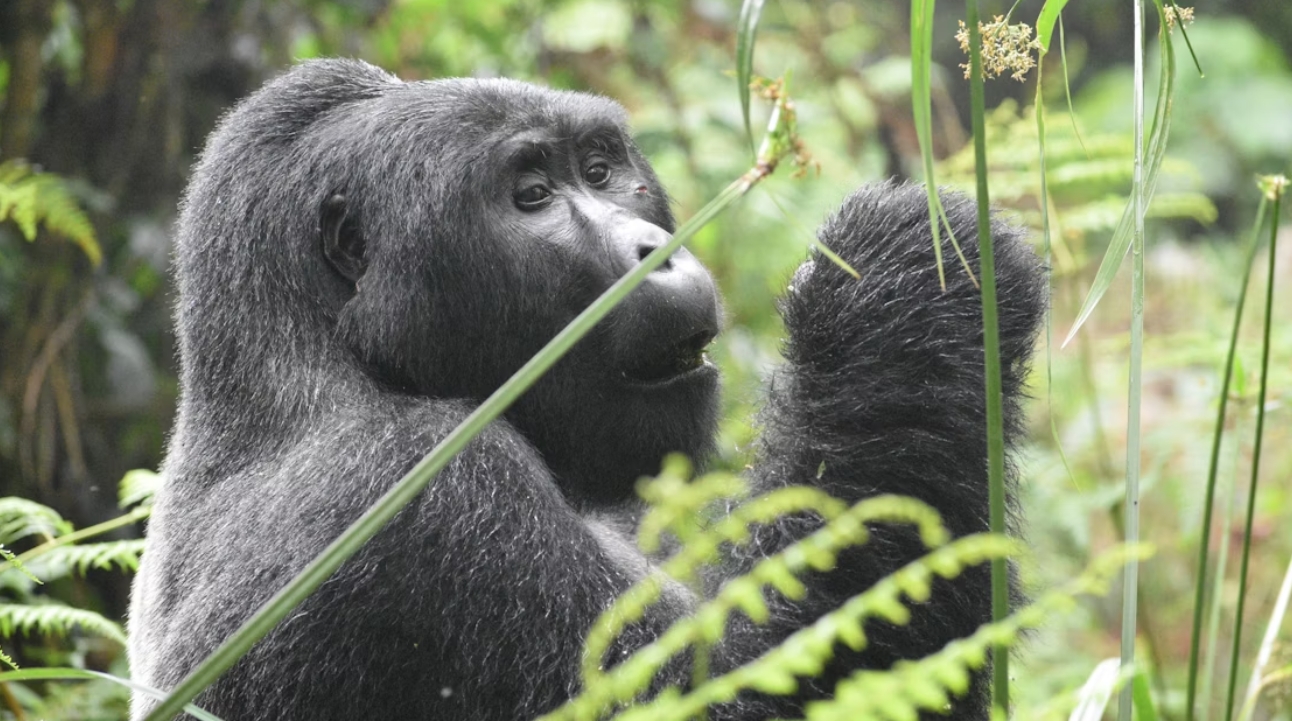
Can I Do Gorilla Habituation in Rwanda?
Can I Do Gorilla Habituation in Rwanda? Gorilla trekking is a highlight of any Rwanda safari, although some travellers are curious about a more immersive experience. With gorilla habituation, visitors have a chance of spending more time with gorillas than the usual regular time frame.
Habituation allows visitors to spend extended time with gorillas, observing their behaviour, social interactions, and daily routines in a natural setting. “Can I do gorilla habituation in Rwanda?” Is a common question normally asked by travelers.
However, this article provides a comprehensive explanation of Rwanda’s gorilla trekking regulations, the concept of habituation, why it is currently unavailable in Rwanda, and alternatives for visitors seeking a more immersive primate experience.
What is Gorilla Habituation?
Gorilla habituation is a process whereby gorillas become accustomed to human presence, allowing visitors to observe them at close range without disturbing their natural behaviour because the gorillas are enclosed in the habitats. It is more intensive than regular gorilla trekking; however, the other regular trekking traverses are strictly given one hour of observing.
It offers longer observation times, up to 4 to 6 hours, a more detailed study of gorilla family interactions, and a deeper understanding of primate social dynamics. During habituation sessions, rangers or researchers may allow participants to follow a gorilla family from sunrise, observing feeding, playing, and social bonding behaviors.
Why Does Gorilla Habituation Exist?
These are some of the reasons why gorilla habituation exists:
scientific research, understanding gorilla behavior, health, and social structures, and long-term monitoring of the populations.
Tourism education: educating visitors on gorilla ecology and promoting conservation awareness.
Conservation support: habituation programs often fund anti-poaching initiatives and local community programs.
Reasons Why Rwanda Is Not Open for Gorilla Habituation?
Unlike Uganda’s Bwindi Impenetrable National Park, which is famous for gorilla habituation, Rwanda’s gorilla habituation is not functioning in relation to tourism. This is attributed to several factors, such as mountain gorillas being critically endangered and the country enforcing strict laws by limiting mass human-gorilla encounters.
This aims at reducing disease transmission since these apes are prone to human diseases and stress. Each gorilla group is allowed only 8 visitors per day. Treks are strictly regulated to protect gorillas’ natural behaviors and habitats.
Rwanda prioritizes high-value and low-volume tourism; however, this approach ensures both conservation success and a premium experience for visitors. A comparison with Uganda.
In Uganda, habituation experiences are available at Bwindi Impenetrable Forest; participants may spend up to 6 hours with gorillas during the habituation process. Tourism revenue contributes to conservation.
Rwanda, by contrast, has not yet opened habituation to protect its already small gorilla population. Protecting gorilla health: Humans can transmit respiratory diseases.
Conservation Strategy
Gorilla habituation is characterized by staying with mountain gorillas for long hours, which, according to the authorities, could increase the risk of acquiring diseases. Therefore, reducing human exposure ensures protection and responsible tourism as gorillas continue to feed, socialise, and increase or reproduce naturally.
Rwanda has only a few habituated gorilla families; this implies that if a traveller is interested in them, they have to book far in advance to be on the safe side. Limiting exposure preserves the integrity of these groups for long-term conservation.
Even though habituation is unavailable, travelers can still enjoy immersive wildlife experiences: trek 1-6 hours into the forest, spend 1 hour with gorillas at a safe distance, and observe feeding, social behaviors, and baby gorillas.
Less crowded and highly interactive, observe playful golden monkeys in Volcanoes National Park. Gorilla habituation activity may last for 4 hours, depending on the location of the gorillas, which is more than the normal trekking time, allowing photographers to capture more dynamic wildlife interactions.
Hike Mount Karisimbi or Bisoke for active exploration and stunning views of gorilla habitats without direct contact. Smaller trekking groups allow quiet observation. Safari guides always offer an insight into the mountain gorillas and their habits.
The dry season, which is experienced from June to September and December to February, offers ideal trekking and hiking experiences. Here, equipment such as a camera, a pair of binoculars, insect repellent, a waterproof jacket, hiking shoes, and a camera with a zoom lens are also essential requirements for a successful gorilla trek.
Local communities benefit through sustainable tourism revenue and employment. Due to the conservation efforts of these endangered mountain gorillas, in recent decades, Rwanda as a country has triumphantly increased its gorilla population. This is widely attributed to Rwanda’s strict conservation efforts of enforcement regulation and sustainable tourism, such as the controlled trekking model.
Adventure Experiences
Besides gorilla trekking, Rwanda provides unique and diverse adventure activities that immerse visitors in unforgettable experiences, such as golden monkey trekking, hiking, community encounters, and cultural experiences. The long-term survival of mountain gorillas is prioritised. Rwanda has successfully doubled its mountain gorilla population in recent decades, and this has been largely because of strict regulation enforcement and responsible tourism, including the controlled trekking model.
These exciting activities offer visitors unforgettable wildlife adventure experiences while supporting the protection of these primates for generations. These gorilla encounters offer visitors, especially nature lovers, photographers, and primatologists, opportunities for conservation education, photography, guided learning, and studying their social behaviours.
All this is done during gorilla trekking, where visitors get up close with mountain gorillas in their natural habitat and spend an hour with these gentle giants at a distance.
Rwanda’s approach balances visitor experience with ethical wildlife management, and this makes Rwanda the world’s premier destination for responsible gorilla tourism. After, visit Iby’Iwacu cultural village for a more cultural and community experience that portrays Rwanda’s cultural heritage after wildlife experiences.