Are Walking Sticks Provided Before Gorilla Trekking in Rwanda?
Are Walking Sticks Provided Before Gorilla Trekking in Rwanda? Rwanda is one of the top countries in Africa that is blessed with mountain gorilla trekking excursions, which draw tourists from different parts of the world. However, the trekking experience is physically engaging when searching for mountain gorillas in their habitats.
With steep slopes, muddy trails, thick vegetation, and uneven ground, many travellers are bothered by this question: “Are walking sticks provided before the gorilla trek in Rwanda?” The answer to that question is yes, but there is much more to understand about how walking sticks are provided, who should use them, their benefits, and how they contribute to safety and comfort during the trek.
However, this article provides a detailed and practical explanation tailored for travellers planning gorilla trekking in Rwanda, as well as travel companies guiding their clients. Volcanoes National Park is not a flat forest. Walking sticks are an essential support tool that helps trekkers navigate this challenging environment safely and confidently, most especially during the rainy season.
What is the Relief of Rwanda’s Gorilla Trekking Destination?
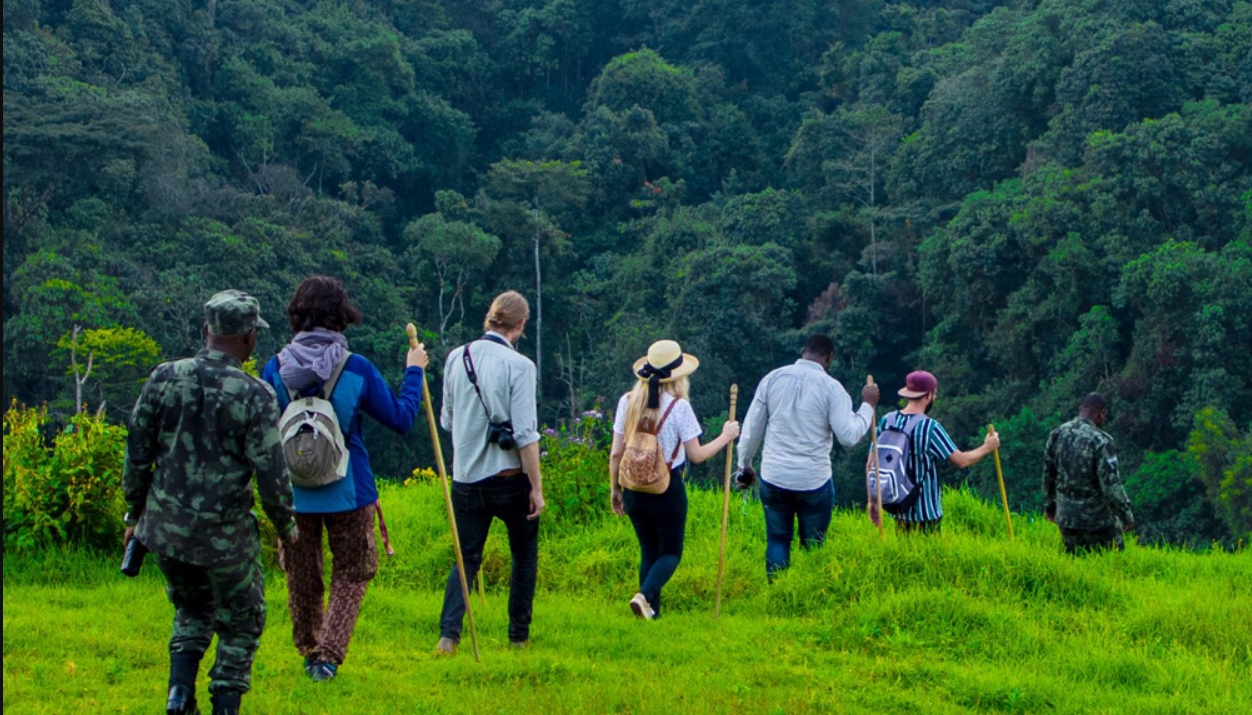
The terrain includes dense rainforest, volcanic slopes, bamboo zones, muddy paths, and high altitudes ranging from 2400 to 4500 metres. In Rwanda, walking sticks are provided free of charge. Walking sticks are available to all trekkers at no additional cost before the trek begins.
They are distributed at Volcanoes National Park headquarters in Kinigi, available to anyone who wants one, and offered after breakfast. Walking sticks are provided after the 7:00 AM briefing, before groups depart to the trailheads, at the starting point of the trek.
Rangers will ask who would want to have a walking stick, assist in selecting a suitable one, and ensure it is comfortable to use. Walking sticks are useful for all trekkers regardless of fitness levels or age.
What is the Role of Walking Sticks During the Gorilla Trekking Process?
Walking sticks are recommended for beginners, older travellers, visitors with knee issues, anyone trekking during the rainy season, and photographers carrying heavy equipment.
It also applies to both physically fit and expert hikers, who often find walking sticks absolutely helpful. Below are among the importances of using a walking stick: First of all, walking sticks give trekkers and hikers balance as a measure to stabilise their movement.
This occurs mainly during hiking, especially on uneven surfaces and steep slopes, to avoid slips, especially on muddy, slick, and slippery surfaces. Reduced joint strain, that is to say, takes pressure off knees and ankles, helpful during downhill sections.
Increased safety entails acting as a third point of contact, helps to test ground stability, and reduces the risk of falls. Enhances endurance: this entails conserving energy and helping to maintain a steady pace.
Comfort and confidence throughout the trek are significantly improved by the walking sticks. During Rwanda’s rainy season, trails become muddy and slippery, vegetation is thicker, and descents are more challenging.
Walking sticks become essential rather than optional, especially during rainy seasons. Walking sticks provided are natural wooden sticks, locally sourced, sturdy, well-shaped, and appropriate for rugged terrain.
They are simple but highly effective, designed for functionality rather than appearance; in other words, their significance is more than their looks. Travellers are allowed to bring personal trekking poles and hiking sticks.
However, single trekking poles are often more practical than double poles; poles must be used carefully around gorillas, and some visitors prefer the provided wooden sticks for authenticity and simplicity. If you bring your own, inform your guide during the briefing.
Tracking Gorillas with Walking Sticks
Once gorillas are found, rangers may ask trekkers to leave walking sticks behind; this minimises sudden movements and helps maintain a calm environment for the gorillas. Walking sticks are usually placed at a safe distance and under ranger supervision.
They are collected again after the one-hour viewing period. Walking sticks provide balance, but they do not replace porters. Unlike the balance and stability offered by walking sticks, porters also play a very big role in easing the trekkers’ movement by carrying their luggage or backpacks and other equipment, assisting them physically on difficult sections, and helping push or pull when necessary.
For maximum comfort, many travellers choose both. Gorilla trekking has a minimum age limit of 15 years in Rwanda. For eligible teenagers, walking sticks are available; rangers ensure proper use, and safety is prioritised at all times.
With walking sticks, challenges of navigating become a walkover; they make steep climbs more manageable, reduce fatigue over long distances, and improve confidence on challenging terrain. The majority of the visitors who have trekked with porters have always witnessed a memorable, exciting, and less stressful experience.
These walking sticks are reusable tools and therefore cause minimal environmental impact and are managed responsibly by park authorities. Their impact enhances Rwanda’s initiative to promote low-impact tourism, trekkers’ safety, and sustainability ethics.
More still, these walking sticks offer visitor safety, which also reduces the level of sustaining injuries and also boosts the entire gorilla trekking and adventure experience.
Walking sticks are provided for free before gorilla trekking in Rwanda, and they are available at the park headquarters and trailheads, suitable for all fitness levels, and highly recommended, most especially in rainy conditions.
Whether you are a seasoned hiker or a first-time trekker, using a walking stick helps you move more confidently, conserve energy, and focus on the incredible moment when you finally meet Rwanda’s mountain gorillas.